
Pressure injuries rarely develop from pressure alone.
One of the most overlooked contributors to skin breakdown is moisture. Whether caused by urinary or faecal incontinence, perspiration or wound exudate, prolonged exposure to moisture weakens the skin’s natural barrier, making it far more susceptible to damage.
Understanding how moisture affects skin integrity is essential for anyone involved in prescribing, caring for or supporting people with limited mobility.When managing clients with complex care needs, it’s easy to think of continence management and pressure care as two separate clinical priorities. One focuses on managing moisture, while the other focuses on preventing pressure injuries.
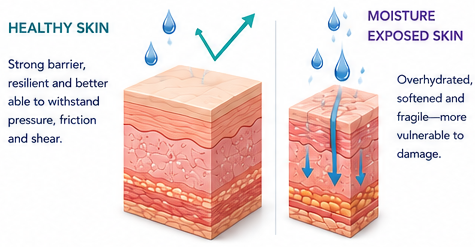
Healthy Skin Is the First Line of Defence
Healthy skin acts as a protective barrier against pressure, friction and shear.
However, when skin is exposed to excessive moisture for extended periods, its structure begins to change. The outer layer softens, becomes more fragile and loses much of its natural resilience.
As the skin becomes overhydrated, it is less able to tolerate the everyday mechanical forces created by movement, repositioning and prolonged sitting or lying.
This is why moisture management plays such an important role in pressure injury prevention.
The Moisture–Pressure Cycle
Pressure injuries often develop through a chain of events rather than a single cause.
The cycle typically begins with a continence episode or prolonged moisture exposure.
Moisture combines with body heat to create a warm, humid environment around the skin. This increased humidity weakens the skin barrier, making it more vulnerable to friction and shear forces during movement or repositioning.
As these mechanical forces increase, the skin becomes more susceptible to damage. Over time, this can lead to incontinence-associated dermatitis (IAD), pressure injuries, discomfort, disturbed sleep and an increased need for caregiver intervention.
Breaking this cycle requires early intervention before skin damage begins.
It’s About More Than Keeping the Bed Dry
A common misconception is that continence management is simply about absorbing fluid.
In reality, moisture management is about controlling the microclimate surrounding the client’s skin.
The microclimate refers to the temperature and humidity where the body meets the support surface.
If moisture remains trapped against the skin, humidity increases. Combined with body heat and sustained pressure, this creates ideal conditions for skin breakdown.
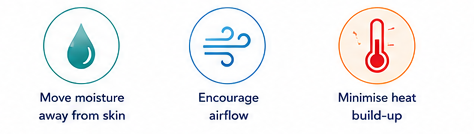
Effective continence products should therefore do more than absorb moisture—they should also help move moisture away from the skin, encourage airflow and minimise heat build-up.
Every Layer Makes a Difference
Pressure care mattresses are carefully engineered to redistribute pressure by allowing the body to immerse into the support surface.
Every additional layer placed between the client and the mattress influences how effectively this happens.
Thick bedding, multiple mattress protectors or unsuitable continence products can reduce immersion and envelopment while also trapping additional heat and moisture.
When selecting products, clinicians should consider:
- Breathability
- Moisture vapour transfer
- Material thickness
- Friction and shear reduction
- Overall comfort
Reducing unnecessary layers helps maintain the clinical performance of the pressure care mattress while supporting healthier skin.
Why Moisture Wicking Is So Important
Not all absorbent products perform in the same way.
Simply absorbing fluid is only part of the solution.
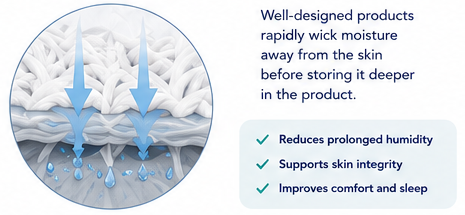
Well-designed continence products rapidly wick moisture away from the skin before storing it deeper within the product. By separating the moisture from the skin surface, they help reduce prolonged humidity while maintaining a healthier microclimate.
This approach supports skin integrity while also improving comfort throughout the night.
Friction and Shear Increase as Skin Softens
Moisture doesn’t just affect skin directly—it also changes how the skin responds to movement.
As skin softens, it becomes more vulnerable to friction and shear.
Even small movements during repositioning or when using an adjustable bed can create additional stress on already fragile tissue.
This is why many clinical support surfaces and continence products are designed using low-friction materials and stretch fabrics that allow the skin to move more naturally with the support surface.
Sleep Plays an Important Role in Healing
Comfort should never be overlooked.
Noisy, stiff or heat-retaining products can disturb sleep, reducing the body’s opportunity to repair and recover.
Soft, breathable materials that minimise friction while maintaining airflow not only improve comfort but also contribute to better quality sleep—an important factor in tissue repair and overall wellbeing.
Taking a Holistic Approach
Preventing pressure injuries requires more than selecting a high-quality mattress.
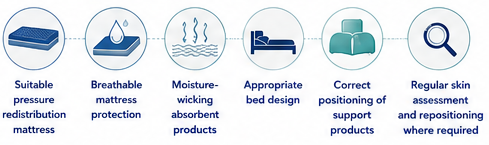
The entire sleep system should work together to support skin health, including:
- A suitable pressure redistribution mattress
- Breathable mattress protection
- Moisture-wicking absorbent products
- Appropriate bed design
- Correct positioning of support products
- Regular skin assessment and repositioning where required
Each element contributes to maintaining a healthier skin environment and reducing pressure injury risk.
Final Thoughts
Moisture is one of the most significant - but often underestimated, risk factors for pressure injuries.
By understanding how moisture affects skin integrity and selecting products that manage moisture, support airflow and preserve pressure redistribution, clinicians can help protect vulnerable skin before damage occurs.
Taking a holistic approach to moisture management doesn’t just reduce the risk of pressure injuries - it supports greater comfort, better sleep, improved healing and enhanced quality of life for people living with complex care needs.