
When managing clients with complex care needs, it’s easy to think of continence management and pressure care as two separate clinical priorities. One focuses on managing moisture, while the other focuses on preventing pressure injuries.
In reality, they are closely connected.
Effective continence management isn’t simply about keeping a bed dry. It directly influences skin integrity, pressure injury risk, comfort, sleep quality and ultimately a person’s overall wellbeing. When these elements are considered together, clinicians can significantly improve outcomes for people receiving care at home.
The Incontinence Cycle
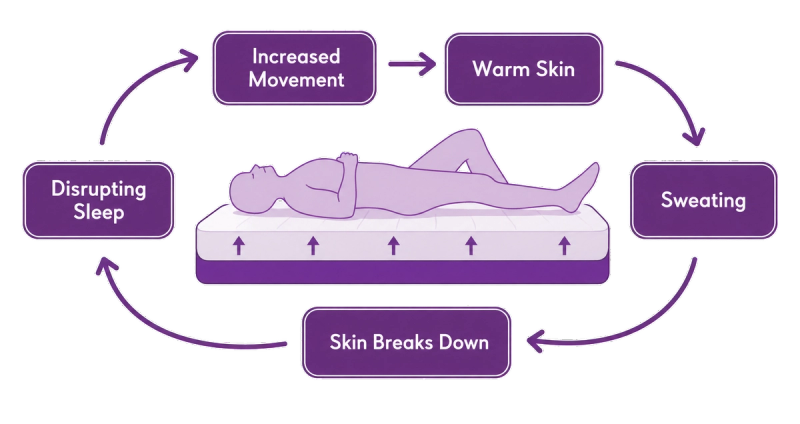
One of the simplest ways to understand this relationship is through what we call the Incontinence Cycle.
A continence episode creates moisture. Combined with body heat and prolonged pressure, that moisture creates a warm, humid environment around the skin. Over time, this weakens the skin’s protective barrier, making it far less able to tolerate friction, shear and pressure.
Once the skin becomes vulnerable, the risk of incontinence-associated dermatitis (IAD), pressure injuries and discomfort increases significantly. Poor sleep, more frequent repositioning and additional caregiver intervention often follow.
Breaking this cycle requires more than simply absorbing moisture. It requires managing the entire microclimate around the client.
Pressure Relief for Skin Health
Pressure care mattresses are specifically designed to redistribute pressure by allowing the body to immerse and envelop into the support surface.
However, every additional layer placed between the client and the mattress influences how effectively that pressure redistribution occurs.
Thick bedding, unsuitable mattress protectors or poorly designed continence products can reduce immersion, increase stiffness and compromise the performance of even the highest-quality pressure care mattress.
When selecting continence products, it’s important to consider:
- The number of layers between the client and the mattress
- The thickness of those layers
- Whether materials reduce friction and shear
- Breathability and moisture vapour transfer
- Overall comfort and sleep quality
The goal isn’t simply waterproof protection—it’s preserving the pressure-relieving properties of the mattress while maintaining healthy skin.
Moisture Management Matters
Managing moisture effectively is one of the most important ways to protect skin integrity.
Well-designed continence products should:
- Wick moisture away from the skin quickly
- Store moisture away from the skin surface
- Allow airflow through the support surface
- Reduce heat and humidity
- Remain soft and quiet during movement
By improving the microclimate around the client, these products help reduce prolonged skin exposure to moisture while supporting comfort throughout the night.
Pressure Care Isn’t Just About the Mattress
Pressure care discussions often focus on the mattress itself, but every component of the sleep system contributes to clinical outcomes.
Absorbent bed pads, for example, are primarily designed to manage incontinence—not provide pressure relief. However, when thoughtfully designed, they should minimise their impact on the pressure redistribution properties of the mattress while effectively managing moisture.
Proper positioning is equally important.
Bed pads should remain securely positioned to prevent bunching or migration, as folds beneath the client can create localised pressure points and increase the risk of skin breakdown. Lightly securing tuck-in flaps helps maintain correct positioning without creating excessive tension across the mattress surface.
Learn more about Icare Bed Pads
The Often Overlooked Role of the Bed
An area that is frequently overlooked in continence management is the design of the bed itself.
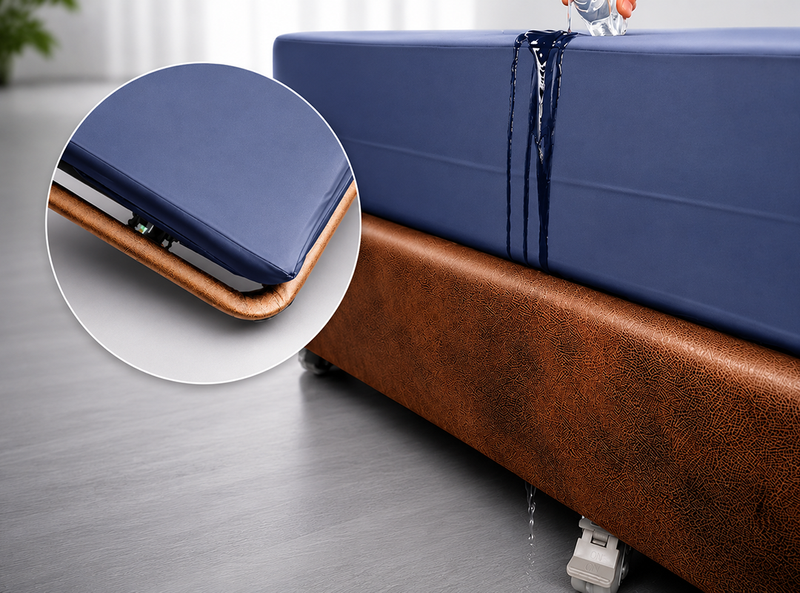
Many domestic-style adjustable beds feature upholstered surrounds and mattress platforms. While visually appealing, these surfaces can absorb moisture over time if exposed to fluid runoff, creating an environment where mould, mildew and bacteria may develop.
Hospital-grade bed designs typically avoid these issues by incorporating easy-to-clean surfaces and improved airflow beneath the mattress. Features such as mesh mattress platforms and floating upholstered surrounds help reduce moisture retention while supporting hygiene and extending the lifespan of both the bed and mattress.
These design considerations become particularly important for clients living with ongoing continence challenges.
Sleep Quality Plays an Important Role
One aspect often overlooked in complex care is comfort.
No matter how clinically effective a product may be, if it creates excessive heat, noise or discomfort, it may contribute to poorer sleep.
Quality sleep supports healing, recovery and overall wellbeing. Soft, breathable materials that minimise friction and reduce heat build-up help clients remain comfortable throughout the night while supporting healthier skin.
Looking Beyond Individual Products
The best continence management strategies don’t rely on a single product.
Instead, they combine:
- Appropriate pressure redistribution
- Effective moisture management
- Breathable materials
- Friction and shear reduction
- Correct product placement
- A clinically appropriate bed system
When these elements work together, they create an environment that protects skin integrity, improves comfort and supports better long-term outcomes for people receiving care at home.
Final Thoughts
Continence management should never be viewed as a standalone hygiene task.
Every decision—from mattress selection to bed design, protectors and absorbent products—can influence pressure care, skin health and quality of life.
By taking a holistic approach that considers moisture, pressure, airflow, comfort and sleep together, clinicians can better support healing while helping clients remain comfortable, independent and dignified in their own homes.